If you have ever walked through Mission Hills and wondered why one block feels porch-forward and classic while the next feels private, courtyard-driven, or glassy and open, you are noticing one of the neighborhood’s biggest strengths. Mission Hills has a layered housing stock shaped by early 20th-century planning, long-standing preservation, and later modern-era design. If you are trying to buy, renovate, or sell here, understanding the main architectural styles can help you match the house to your lifestyle and make smarter decisions. Let’s dive in.
Why Mission Hills Feels So Distinct
Mission Hills sits above Old Town and is recognized by the City of San Diego as a neighborhood of stately, unique homes, many dating to the early 20th century and carefully preserved. According to the City of San Diego’s Mission Hills community overview, the neighborhood remains one of Uptown’s better-preserved concentrations of early homes.
That sense of character is not accidental. Uptown planning materials connect the area’s growth to John Nolen’s 1908 plan, which favored curving streets, street hierarchy, and open space rather than a strict grid. That planning approach helped create a neighborhood where different house styles can still feel visually cohesive.
Even when homes differ in form, many share repeated details that tie the streetscape together. The Uptown survey notes features like gull-wing porch roofs, thick cylindrical columns, clipped gables, exposed purlins, wide overhangs, and cobblestone porch piers and chimneys. Those recurring elements are part of why Mission Hills feels curated rather than random.
Craftsman Homes in Mission Hills
Craftsman and bungalow forms are some of the easiest styles to spot in Mission Hills. City documents describe many early houses here as Craftsman, Prairie, or Spanish Colonial Revival, often in four-square form, and local guidelines point to Craftsman bungalow examples on Sunset Boulevard.
In general, Craftsman and California bungalow homes are known for broad gables, deep porches, exposed rafters, tapered porch posts, and natural materials. The National Park Service overview of Craftsman-era housing also notes that these homes often reduce hallway space in favor of more open plans and a stronger connection to the landscape.
What Craftsman Homes Offer
For many buyers, Craftsman homes offer a grounded, human-scale feel. The porch often acts as a true extension of the home, giving the front elevation warmth and making the house feel connected to the street.
Inside, the layout can work well if you want spaces with a little more definition. Based on the style’s form and plan characteristics, these homes can often support a quieter office, den, or library while still keeping a social center around the main living areas. If you value charm, architectural detail, and a strong sense of arrival, Craftsman homes often deliver.
Best Fit for Everyday Living
Craftsman homes tend to appeal to buyers who like intimate entertaining and spaces that feel comfortable rather than oversized. Front-porch living and landscaped entry thresholds can also make outdoor use feel more personal and inviting.
For work-from-home needs, a Craftsman layout may be especially appealing if you want a room with separation instead of one large open space. That can be useful when you need privacy for calls, reading, or focused work.
Spanish and Mission Revival Styles
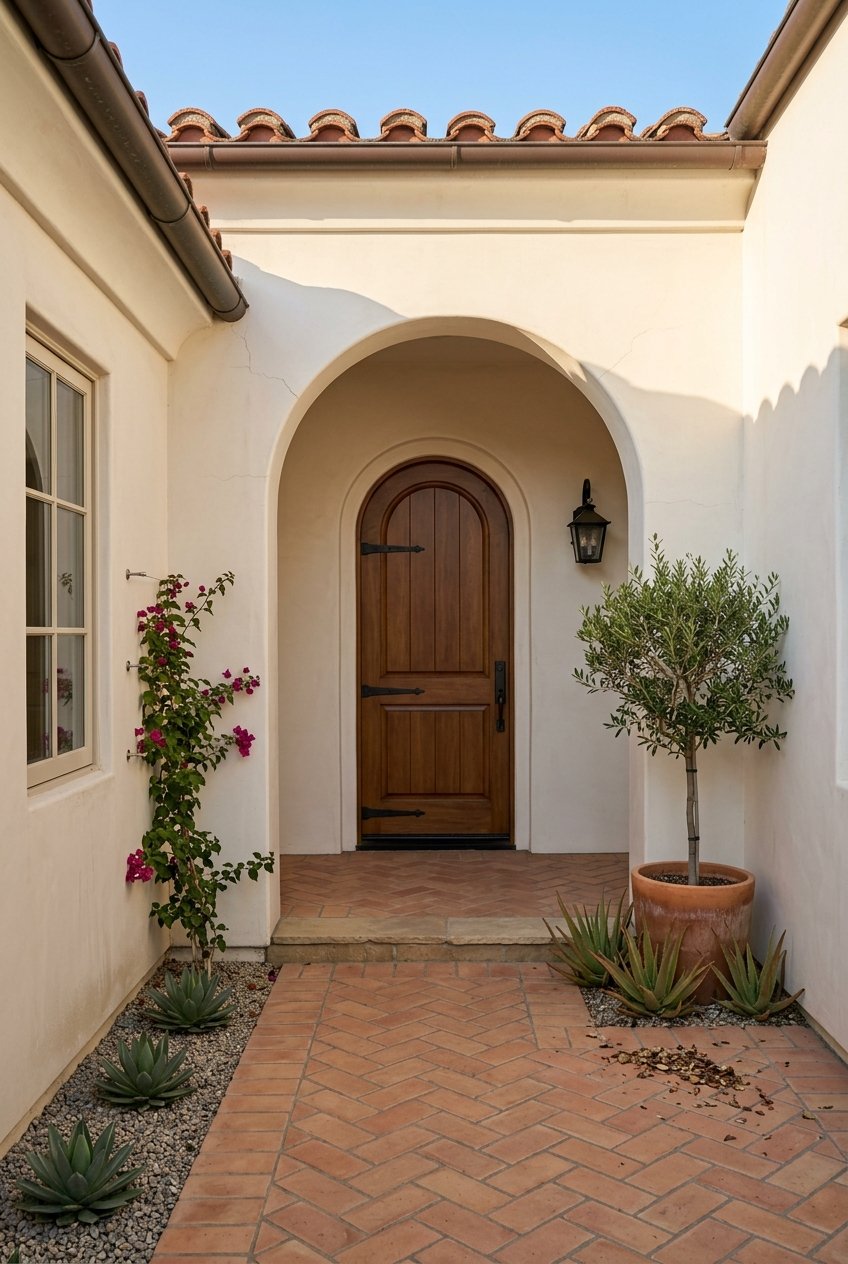
Mission Hills also has a strong presence of Mission Revival and Spanish Colonial Revival homes. The National Park Service description of Mission Revival architecture highlights stucco exteriors, rounded arches, red clay tile roofs, courtyards, balconies, and parapet forms that can echo mission towers.
The Mission Hills design guidelines describe Spanish Colonial Revival homes as more decorative, with asymmetrical massing, arched entries, porches, wrought iron, and heavy tile roofs. Like the Craftsman examples, these styles are also represented on Sunset Boulevard in the local guidelines.
What Spanish-Style Homes Offer
Spanish and Mission Revival homes often create a stronger transition between the house and the outdoors. Instead of one open yard experience, these homes may offer courtyards, walled patios, balconies, and deep-set openings that feel more like outdoor rooms.
That can translate into more privacy and more shade. If you like the idea of a home that reveals itself gradually, with layered indoor-outdoor spaces and a more enclosed feel, this style often stands out.
Best Fit for Lifestyle and Entertaining
For entertaining, Spanish Revival homes can feel dramatic in a very livable way. Guests often move through arched entries, patios, or courtyard spaces that make the home feel intentional and memorable.
For daily life, these homes may work especially well if you enjoy outdoor areas that feel sheltered rather than fully exposed. If you want a courtyard-facing room, balcony, or sunroom feel, this architectural style may align closely with what you are looking for.
Midcentury and Ranch-Inspired Homes
Mission Hills is not limited to early 20th-century architecture. The City’s modernism context includes Mission Hills residences from the 1940s through the 1960s, including a 1963 Delawie residence and a 1962 Howard Chernoff residence. The same City modernism documentation describes custom ranch and post-and-beam homes as low-profile, often L-shaped or highly glazed, with floor-to-ceiling glass, sliding doors, and indoor-outdoor living.
These homes can feel very different from the neighborhood’s earlier architecture, but they are still part of Mission Hills’ design story. They reflect the period when modern living emphasized openness, daylight, and a stronger relationship to patios and yard space.
What Midcentury Homes Offer
If your priorities lean toward flexibility, midcentury-influenced homes often stand out. Based on their glazing and plan features, they tend to offer bright interiors, easier circulation, and stronger flow for relaxed entertaining.
They can also be practical for modern routines. If you want a home office with daylight, easier movement between rooms, or indoor-outdoor living that feels seamless, this style often checks those boxes.
Best Fit for Modern Living
Among Mission Hills styles, midcentury and ranch-inspired homes are often the easiest fit for buyers seeking open layouts. The combination of glass, sliding doors, and lower-profile forms usually supports a more casual lifestyle.
For entertaining, these homes can feel especially easy to use. Larger gatherings often work better when living, dining, and patio areas connect naturally, and that is one of this style’s core strengths.
Choosing a Style by Priority
If you are deciding between architectural styles in Mission Hills, it helps to start with how you want to live instead of which façade you like most.
For Work-From-Home Needs
If a home office is high on your list, midcentury-influenced homes often provide the easiest setup because of flexible plans and strong daylight. Craftsman homes may be a great match if you prefer a separate den or quieter enclosed room. Spanish-style homes can also work well when a courtyard-facing room or sunroom is part of the layout.
For Entertaining Flow
Each style supports entertaining a little differently:
- Craftsman: More intimate, porch-centered, and room-defined
- Spanish Revival: Strong transition from interior to patio or courtyard
- Midcentury: Most open for larger gatherings because of glass and wide connections to the yard
For Outdoor Living
Outdoor space also feels different from style to style:
- Craftsman: Front-porch life and landscaped thresholds
- Spanish Revival: Shaded courtyards, balconies, and enclosed outdoor rooms
- Midcentury: Terraces, patios, and glass-facing yard space
Renovation and Preservation in Mission Hills
If you are buying or already own a home in Mission Hills, architecture is not just about aesthetics. It can directly affect what updates are appropriate and what review may be required.
The Uptown planning materials note that Uptown includes the Mission Hills Historic District, and historic districts are defined as significant concentrations of resources with legal protection from development. The City also says that owners of designated historic resources and district contributors should maintain their properties under the Secretary of the Interior’s Standards and obtain approval for maintenance, restoration, or alteration work.
The Mission Hills Historic District guidelines were created to help homeowners and designers preserve historic fabric before planning new houses, additions, or remodels. They also note that some minor additions may be handled through administrative review approvals.
What Thoughtful Renovation Looks Like
In general, Craftsman and Spanish homes often benefit most from repairs and updates that preserve original windows, porches, tile, wood, stucco, and other defining details. With midcentury homes, selective upgrades to systems and glazing can make sense while maintaining the low-profile form and indoor-outdoor relationship that define the house.
This is where design judgment matters. In Mission Hills, the goal is often not to erase a home’s original character, but to make it function better while respecting what gives it long-term appeal.
Why Historic Status Matters
Not every Mission Hills home is historic, but historic status can affect remodeling. The City’s historic district information explains that work on designated sites may require review, and San Diego historical resources guidance notes that certain projects may require a Site Development Permit for historical purposes, while some may qualify for an exemption if they meet the Secretary’s Standards.
The same City resource explains that the Mills Act can provide a property-tax reduction for owners of designated historic resources who preserve and restore important historical features and materials. Local historical designation is required before entering into a Mills Act agreement.
What This Means for Buyers and Sellers
For buyers, understanding Mission Hills architecture helps you narrow the search based on function, not just looks. A porch-forward Craftsman, a courtyard-centered Spanish home, and a glassy midcentury house can all offer a great lifestyle, but they do so in very different ways.
For sellers, the style of your home often shapes both marketing and preparation strategy. Original details, preserved character, and thoughtful upgrades can all influence how your property is presented and how buyers understand its value.
If you are weighing whether to buy, renovate, or prepare a Mission Hills property for sale, it helps to work with a team that understands both the market and the design decisions that matter. Josh Higgins brings a design-forward, hands-on approach to Mission Hills homes, helping clients evaluate character, potential, and presentation with clarity.
FAQs
Are all Mission Hills homes historic?
- No. Mission Hills has many early 20th-century homes, but it also includes later modern-era residences from the 1940s through the 1960s.
Which Mission Hills architecture style is most flexible for modern living?
- In many cases, midcentury-influenced homes are the most flexible because they often feature open circulation, more glass, and stronger indoor-outdoor living.
Can you remodel a historic home in Mission Hills?
- Yes, but designated properties or homes within a historic district may be subject to city review and preservation standards.
What do Craftsman homes in Mission Hills usually offer?
- Craftsman homes often offer strong porch presence, natural materials, and room layouts that feel more defined and intimate.
What do Spanish Colonial Revival homes in Mission Hills usually offer?
- These homes often offer stucco exteriors, arches, tile roofs, and outdoor spaces like courtyards, patios, or balconies that create privacy and shade.