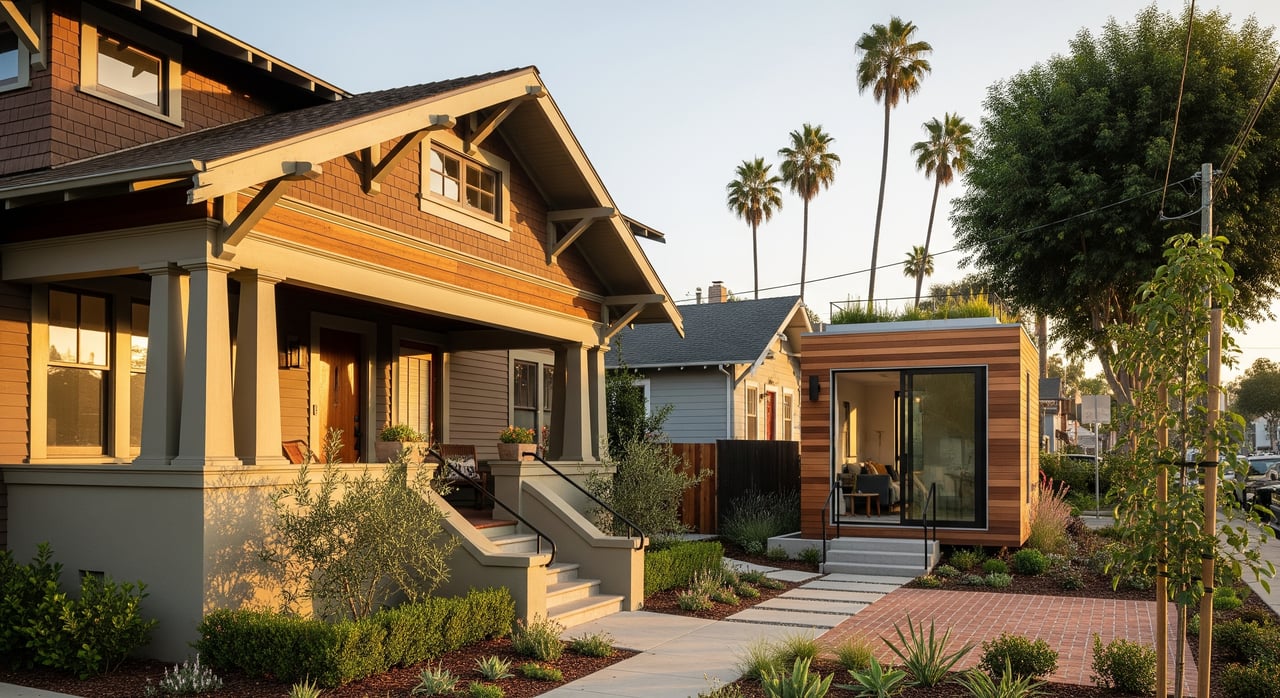
Thinking about house hacking in North Park but not sure if you should buy a duplex or add an ADU to a single-family home? You’re not alone. With strong rental demand and a mix of property types on almost every block, North Park offers real options if you want your home to help pay the mortgage. In this guide, you’ll learn how each path works, what it tends to cost, how to estimate rents, what to expect with permits and timelines, and a simple way to compare returns. Let’s dive in.
North Park basics for house hacking
North Park is a dense, walkable neighborhood with a mix of single-family homes, older bungalows, and smaller multi-unit buildings. The area’s amenities and transit access support consistent rental demand for well-located, well-presented small units.
Zoning in North Park varies block by block. Some parcels allow multi-family, while many are single-family. Always confirm what you can build at the parcel level through the City of San Diego’s zoning resources.
Plan for property taxes at roughly 1 percent of assessed value in San Diego County, plus local assessments. A resale typically triggers reassessment at market value, so your tax base will follow your purchase price rather than the seller’s prior bill.
Duplex vs ADU at a glance
Both options can work in North Park, but they deliver value differently.
- Duplex: You acquire two legal units on day one. This can generate immediate income, but purchase prices per unit may be higher than adding an ADU later. You avoid construction timelines, yet you may need rehab to reach market rent.
- ADU on a single-family home: You buy a home and add a separate unit. You control design and finishes, and smaller ADUs can benefit from reduced fees. You do take on permitting, construction, and carrying costs during the build.
What it costs in North Park
Real outcomes depend on the specific property and your financing, but you can map the moving pieces reliably.
Duplex acquisition: cost components
- Purchase price and price per unit.
- Financing structure: Conventional and FHA loans cover 2 to 4 units, often with different down payment and underwriting standards than single-family loans. Owner-occupants may access more favorable terms than purely investor loans.
- Closing costs and escrow fees: Budget several percent of the purchase price.
- Property taxes: Approximately 1 percent of assessed value plus local assessments, with reassessment at resale.
- Insurance: Landlord coverage for rental units, potentially different from owner-occupant policies.
- Immediate rehab and turnover: Kitchens, baths, flooring, and systems can be needed to reach market rent.
- Operating reserves: Lenders or prudent planning often call for several months of expenses in reserve.
SFR plus ADU: cost components
- Purchase price of the single-family home.
- ADU hard costs: Detached, attached, or conversion types vary widely based on size, foundation work, kitchen and bath scope, and finishes.
- Soft costs: Design and architecture, engineering, permits, potential impact or connection fees, and utility upgrades or meters.
- Carrying costs: Mortgage, taxes, and insurance during design and construction.
- Utility setup: Separate metering can be optional or preferred; confirm feasibility and cost.
Permits and timelines in San Diego
ADUs: what to expect
California law expanded ADU rights with mostly ministerial approvals when objective standards are met. Local jurisdictions can set objective design and setback rules. State guidance commonly allows ADUs up to 1,200 square feet, and some smaller ADUs may qualify for reduced or exempt impact fees. Owner-occupancy requirements have been limited by state changes, though specifics can vary. Always confirm City of San Diego standards and fee schedules before you start.
A typical ADU process:
- Pre-check: Confirm zoning, setbacks, lot coverage, and utility capacity. Verify whether separate meters are required or optional.
- Design and plan set: Prepare drawings that meet City standards. Conversions may require a simpler plan set.
- Ministerial review: Submit to the City for building and planning reviews. Projects that meet objective standards are typically approved.
- Permit issuance: Pay any required fees, then pull permits.
- Construction and inspections: Build, schedule inspections, and receive final occupancy once approved.
Duplexes: what to verify
Buying an existing duplex usually avoids new construction permitting, but you should confirm both units are legal and permitted. Check past building permits and the certificate of occupancy. If a property has nonconforming or unauthorized units, legalizing them can require upgrades and additional time.
Typical timelines
- ADU: A few months for simple conversions or smaller builds, up to 9 to 18 months for larger detached ADUs with site work. City workload, plan completeness, and contractor schedules all matter.
- Duplex: Escrow-driven timelines for the purchase. If you need permits for repairs or to legalize work, expect a process similar to the ADU path in scope and duration.
Estimating rent the right way
Rents in North Park are driven by size, condition, layout, private entrances, outdoor space, parking, and utility arrangements. Build a comp set instead of guessing.
Follow this step-by-step approach:
- Define the product: Specify size, bed and bath count, unit type, separate entrance, laundry, outdoor space, parking, and utilities.
- Pull multiple data points: Use active listings, recently rented data, and property manager input for context.
- Adjust for features: Add or subtract roughly 5 to 10 percent for parking, separate utilities, or premium finishes.
- Time your comps: Focus on the past 30 to 90 days for relevance.
- For duplexes: Estimate each unit separately, then roll up gross rent. Account for split utilities and shared costs.
Pro tip: ADUs with separate entrances, private laundry, and off-street parking tend to be more competitive. Units without parking in parts of North Park may require a pricing adjustment.
Management and regulations to factor in
Tenant laws and local rules
California’s statewide tenant protection law generally caps certain rent increases and requires just cause for many evictions, with exemptions for specific property types and newer construction. San Diego also regulates short-term rentals and transient occupancy tax registration. Confirm which rules apply to your specific property type and lease strategy.
Duplex vs ADU operations
- Duplex: Two separate leases and standard multi-unit workflows. Utilities may be separately metered, and off-site ownership often drives more formal property management.
- ADU: Often shares site amenities with the primary home. On-site owner-occupants may benefit from simpler oversight, but should use clear lease terms that address parking, shared spaces, and utilities.
Across both options, plan for vacancy, maintenance, insurance, utilities if paid by the owner, and a reserve for capital items. Many local managers suggest conservative underwriting with vacancy and maintenance in the 5 to 10 percent range of gross rent.
ROI, side-by-side examples
Use a simple framework to compare. Start with these formulas:
- Gross Rental Income, or GRI: Monthly rent for each unit multiplied by 12.
- Effective Gross Income, or EGI: GRI minus vacancy.
- Net Operating Income, or NOI: EGI minus operating expenses, excluding debt.
- Cap rate: NOI divided by purchase price.
- Cash-on-cash return: Annual cash flow after debt divided by total cash invested.
- Payback period: Cash invested divided by annual cash flow.
Below are illustrative numbers to show the math. Replace them with your actual quotes for price, rent, expenses, and loan terms.
| Item | Buy Duplex | SFR plus ADU |
|---|---|---|
| Purchase price or total basis | 1,000,000 | 1,000,000 total - 800,000 home plus 200,000 ADU build |
| Units and illustrative rents | 1BR at 2,100, 2BR at 2,800 | ADU 1BR at 2,200, owner occupies main house |
| Gross annual rent | 57,600 | 26,400 |
| Vacancy allowance, 5 percent | 2,880 | 1,320 |
| EGI | 54,720 | 25,080 |
| Operating expenses | 16,416 at 30 percent of EGI | 6,270 at 25 percent of EGI |
| NOI | 38,304 | 18,810 |
| Example financing | 25 percent down, 30-year loan on 750,000 at 6.0 percent | Example total loan of 800,000 at 6.0 percent |
| Approx. annual debt service | 53,952 | 57,548 |
| Annual cash flow after debt | -15,648 | Depends on how you allocate debt to the ADU, see below |
| Cap rate | 3.83 percent | NOI divided by total cost as applicable |
| ADU-only cash-on-cash example | n-a | 18,810 divided by 200,000 equals about 9.4 percent |
What it means:
- Duplex: You get two income streams immediately, but at this example price and rate the debt service produces negative cash flow. Your results can change significantly with interest rates, down payment, and real rents.
- SFR plus ADU: The ADU adds incremental income to your primary residence. If you fund the ADU cost efficiently and control expenses, the marginal return on the ADU investment can be attractive, even though the total mortgage may be larger.
Which path fits your plan?
Choose the duplex if you want immediate two-unit income, prefer to avoid a build timeline, and can underwrite a purchase price that supports your cash flow and risk tolerance. Budget for unit updates to hit market rent.
Choose the SFR plus ADU route if you value control over design and finishes, are comfortable with a permit and construction process, and plan to live on-site. Smaller ADUs can benefit from reduced fees, and clear house rules can make co-living on one lot run smoothly.
Either way, your numbers should drive the decision. Ground your rent comps within a mile, confirm zoning at the parcel level, get current interest rate quotes for your exact loan type, and model conservative expenses and vacancy.
Ready to run the numbers on a property you love or build a practical ADU plan for your lot? Let’s map your options and design a path that fits your goals. Connect with Josh Higgins to get a neighborhood-specific strategy and a clear, ROI-focused action plan.
FAQs
What is house hacking in North Park and how does it work?
- House hacking means you live in one unit and rent another, such as buying a duplex or adding an ADU to a single-family home to offset your mortgage with rental income.
How do duplex and ADU financing options differ for owner-occupants?
- Conventional and FHA loans cover 2 to 4 units with different down payment and underwriting rules than single-family loans, and owner-occupant terms can be more favorable than investor-only loans.
How long does it take to permit and build an ADU in San Diego?
- Simple conversions or small ADUs can be completed in a few months, while larger detached builds with site work commonly take several months to over a year from design through inspections.
What operating expenses should I include when I underwrite a duplex or ADU?
- Include property taxes, insurance, management if used, repairs and maintenance, utilities if paid by the owner, any HOA fees, a vacancy allowance, and a reserve for capital items.
Are there special rules for renting out ADUs or duplex units in San Diego?
- ADUs are generally allowed for long-term rentals, while short-term rentals are regulated by local ordinances that may require registration; statewide tenant protections also apply to many units.